
Biophilia
You know how hotel rooms with mountain or ocean views are more popular and therefore more expensive than views of the surrounding buildings? How about the fact that so many of the U.S.’s lakes are packed with summer homes built directly beside them? If time were no object, would you choose to drive to work on a woodland road or a sparse highway?
All around us, the modern world provides small clues that many people prefer nature views and proximity to nature compared to urbanscapes absent of greenery, water, and fauna. Researchers have long wondered: is there something in our biology - even our genes - that makes us favor nature over manmade landscapes? One of the prevailing ideas that has gained traction across several scientific disciplines is called biophilia, from the Latin words “bio” (life, aka living creatures and nature), and “philia” (love). In this article, we’ll dive into the nuances of the concept, but generally speaking, biophilia suggests that humans tend to respond positively to nature and that tendency has a partly genetic basis.
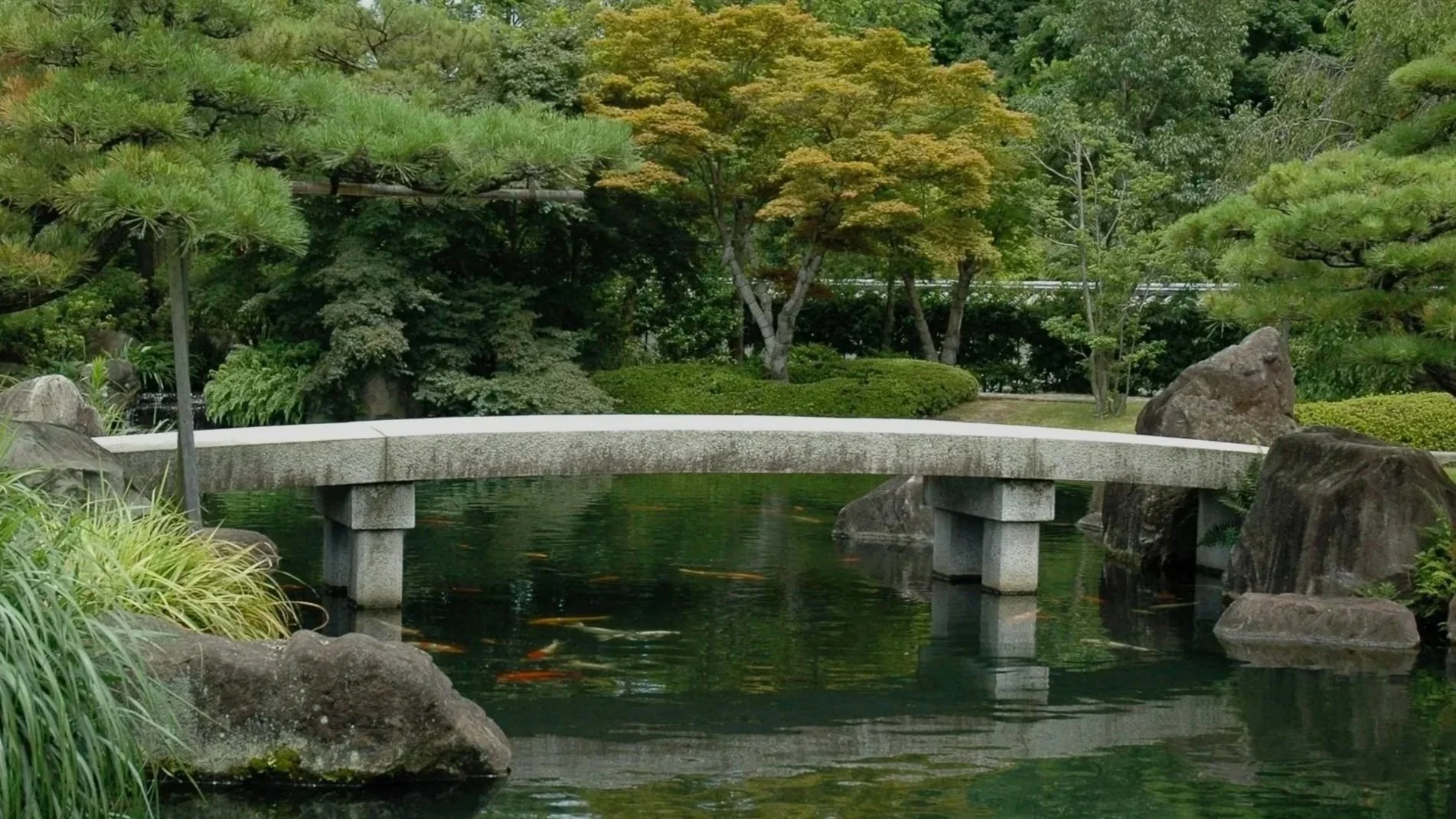
Biophilia Defined
In 1964, the German psychologist Erich Fromm coined the term biophilia to describe “the passionate love of life and all that is alive.” Fromm’s concept argues that humans will tend to preserve life and fight death, that we prioritize growth in all things (plants, humans, groups, ideas), that we seek union with other people and with nature, and that nature offers us opportunities for rest and renewal.
Fromm theorized that humans are born with these innate tendencies - like a personality trait - and, if fostered over time, these tendencies can be cultivated into behaviors that favor nature, like choosing a natural setting for a vacation in which we want to relax. When our core safety and security needs are met and we have the freedom to explore, Fromm believed we have the capacity to develop a sense of care, responsibility, respect, and knowledge about the natural world.
American biologist E.O. Wilson further developed the biophilia concept in 1984. For Wilson, biophilia means “our innate tendency to focus upon life and life-like forms and, in some instances, to affiliate with them emotionally.” As with Fromm, Wilson’s conception of biophilia includes a set of learning rules that help humans develop our personal relationship to nature on various spectrums, like attraction vs. aversion, awe vs. indifference, and peacefulness vs. fear. These learning rules are thought to be pretty weak, meaning that everyone will develop their own set of behaviors based on their propensities: a love of nature must be introduced and nurtured over time in order to be fully realized. Another way to think about this is something like alcoholism: even though scientists have proven there is a gene for addictive pre-disposition, that does not automatically mean that a person will become an addict - there is a learning component.
The Biophilia Hypothesis
Biophilia is still largely unproven by empirical data, so it is often more accurately referred to as the biophilia hypothesis. Many scientific studies provide compelling data that might be considered circumstantial evidence of biophilia as an evolutionary process; let’s take a look at a few of the arguments.
There are three main areas of nature research that biophilia proponents like to explore: nature as aesthetically pleasing and attractive to humans, nature as restorative to humans (particularly in stress recovery), and nature as a setting that enhances high order cognitive functioning (things like problem solving, critical thinking, and creativity).
Nature as Pleasing
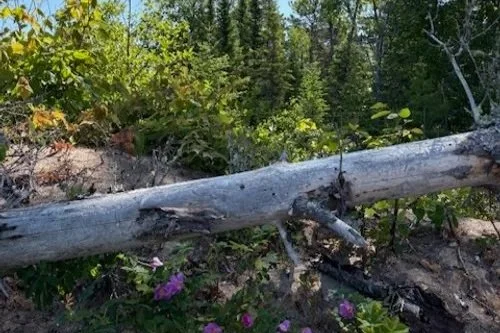
Keep in mind that the time period from the Industrial Revolution to present day comprises only 0.01% of human history: humans lived and evolved in the natural environment far, far longer than we’ve had buildings and cell phones, so the biophilia hypothesis proposes an evolutionary component to our relationship to nature: the humans that were able to figure out ways to survive in the natural environment were the ones who survived, passing those tendencies down.
The evolutionary process approach to biophilia explains that humans may be genetically predisposed to favor landscapes that offer the greatest chance of survival (aka food, shelter, and water), so it’s theorized that humans prefer savanna-like environments as opposed to places like the desert or the rainforest where these elements are less readily accessible. Early humans gained an appreciation for things like flowers and vegetation because we learned to associate those with the presence of water and other animals that could support us.
The vast majority of scientific studies that measure human responses to nature contrast it to our responses to urban environments, and most of them do it by showing participants pictures of nature and measuring their affective responses on various scales (aka, “I feel xx when I observe this photograph of a river” versus a photograph of a European town). Studies like these consistently show that people generally tend to prefer natural settings to urban settings, even if the natural setting isn’t particularly astounding. Additionally, people prefer urban settings that have natural elements like water features and trees as opposed to urban settings without any nature at all.
Nature as Stress Reducer
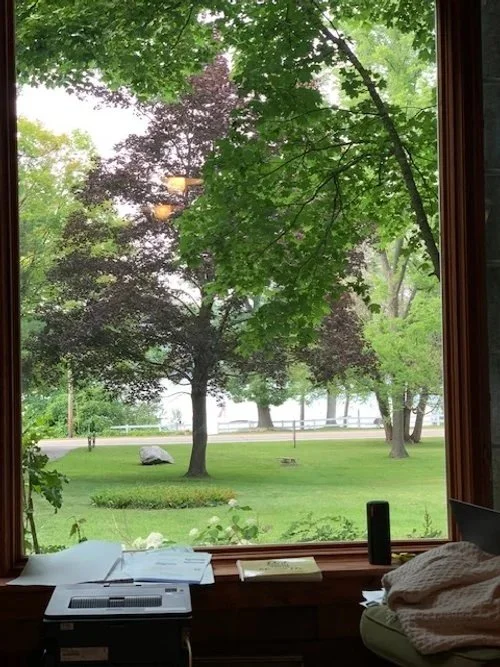
The second largest body of scientific research on biophilia-related ideas looks at nature’s ability to provide stress reduction and rejuvenation for humans. From an evolutionary standpoint, biophilia proponents suggest that since life in the premodern world was so stressful for humans, those who were able to identify and spend time in natural areas that allowed them to rest and recover from that stress were those who had the best chance of survival, so we carried this preference for the restorative aspects of nature through our development over time. This may explain, then, why the vast majority of participants in wilderness recreation studies say that one of their main reasons for enjoying these experiences is the stress reduction it provides them.
Lots of studies conducted in prisons and hospitals - settings traditionally known to have lots of stressed-out people - have revealed biophilia-affirming results: prisoners with nature views versus views of the prison reported less headaches, stomach issues, and requests for medical visits, and patients recovering from surgery who had rooms that overlooked nature recovered faster and had fewer recovery complications than patients whose window looked at a brick wall.
Nature as Creativity Enabler
The area of the biophilia hypothesis that has the least amount of empirical backing is the idea that natural environments may enhance our ability to perform high level thinking. The idea is that the early humans who were able to identify and exist in natural settings that allowed them the freedom to concentrate on things like developing tools became the fittest for survival. Anecdotally, a lot of artists, writers, and Nobel prize winners have claimed to get their best inspiration when walking in nature: could it be that there’s something advantageous to those settings beyond aesthetic pleasure that allows for this level of creativity? American psychologist Alice Isen conducted a lot of studies focusing on the impact of people’s emotional state on their performance. Her studies have led to a general understanding that positive emotions help us do things like remember interconnected information whereas negative emotions impair our memory, restrict our focus, and hinder our creativity. The biophilia idea, then, is that if natural spaces draw out positive emotions in humans, we may be more apt to perform better creatively in those settings.
Critiques of Biophilia
Given that biophilia is still only a hypothesis, there are of course many critics of the concept, particularly of the idea that biophilia may have a genetic component; the fact that “nature” can be so widely defined and that not all human populations have been studied make it very difficult to claim a shared human genome for love of nature, particularly when you consider cultural learning as a key influencer in preferences. Nature is so complex that it’s difficult to point to exactly what components are influencing our preferences. Even biophilia theorists agree that in order to substantiate the claim, it would be necessary to prove definitively that the aesthetic, restorative, and cognitive benefits of nature cannot be achieved in other settings - a tall order given the existence of things like drugs that can reduce the physical symptoms of stress and the fact that the vast majority of empirical studies about nature’s positive effects utilize images of nature rather than nature itself. Further, biophilia critics say that the definition of biophilia as encompassing a tendency toward not only life but “life-like” things makes the concept murky and difficult to prove.
Practical Applications of Biophilia
There are several popular practices inspired by the biophilia hypothesis that we will explore in other articles: the Japanese practice of forest bathing (shinrin yoku) is based on the premise that since humans have spent the majority of our evolutionary history in nature, we are most at ease when we return there.
Additionally, biophilic design is a popular architectural movement that seeks to increase our connection with nature through incorporating natural elements, materials, and colors into our living and working spaces.
Lastly, biophilia is a popular hypothesis for nature conservationists because it allows for the argument that the preservation of natural settings is not only worthwhile from the perspective of preserving biodiversity and the survival of plant and animal species, but that there are so many links between nature and human wellbeing that conservation is essential for our survival.
Here are some ideas for how the biophilia hypothesis can be used to enhance our worklife.
Idea #1
Whether you are convinced or skeptical of the idea that biophilia is built into our genes, the circumstantial data that we are drawn to nature’s beauty and peacefulness is worthy of a test: the next time you’re ready to veg out on the couch, instead try wandering outdoors to a setting that allows for views of nature instead of manmade items. See how you feel.
Idea #2
Whenever your circumstances and wallet allow, opt for an office or workspace with a view of nature instead of a cityscape. Similarly, on your next work trip, if your travel budget allows, request a hotel room that provides maximum views of as much nature as possible.
Idea #3
If you are in charge of designing or upgrading workspaces in your job, check out tips about biophilic design to see if subtle changes to light, color, and design features might give your team a positivity and/or creativity boost.
Idea #4
Biophilia is an interesting concept if you’re someone who doesn’t particularly enjoy the outdoors or nature-related activities, and/or you work at a job that doesn’t have a lot of opportunities to interact with nature. Something as small as hanging a wall calendar with photographs of natural settings or buying a small potted plant for your desk may provide subtle wellbeing benefits without significantly changing your daily activities or routine.
Sources
Barbiero G, Berto R. Biophilia as Evolutionary Adaptation: An Onto- and Phylogenetic Framework for Biophilic Design. Front Psychol. 2021 Jul 21;12:700709. doi: 10.3389/fpsyg.2021.700709. PMID: 34367025; PMCID: PMC8334556.
Joye, Y., & De Block, A. (2011). ‘Nature and I are Two’: A Critical Examination of the Biophilia Hypothesis. Environmental Values, 20(2), 189-215. https://doi.org/10.3197/096327111X12997574391724 (Original work published 2011)
Kellert, Stephen. (1993) Biophilia and the Conservation Ethic. In: Kellert, S.R. and Wilson, E.O., Eds., The Biophilia Hypothesis, Island Press, Washington DC, 32-40.
Ulrich, R.S. (1993) Biophilia, Biophobia, & Natural Landscapes. In: Kellert, S.R. and Wilson, E.O., Eds., The Biophilia Hypothesis, Island Press, Washington DC, 73-137.
