
Walking at Work
Writers and philosophers have long touted the benefits of walking - particularly nature walks - for introspection, creativity, and a fresh perspective. Even without empirical evidence, many of us probably agree that there is an undeniable connection between movement and thought - we feel better when we exercise, and taking a walk can help us “clear our heads.” Organizational psychologists and business leadership coaches like the Aresty Institute for Executive Education at Wharton Business School encourage workers to engage in movement at work like walking meetings and walk breaks as beneficial for positive work outcomes like decision-making, creativity, and problem solving. In this article, let’s lace up our walking shoes and learn what the science has to say about walking to improve our work.
Nature and Cognitive Functioning
In the context of the Biophilia Hypothesis (the notion that humans have an evolutionary connection to nature), nature has long been theorized to improve functioning in what psychologists call high-order cognitive tasks. These are tasks that involve integrating diverse material or associating previously unrelated information or concepts in a flexible way. High-order functioning is necessary for important work tasks like creative problem solving. Since psychological studies have proven that the negative emotions brought on by stress cause us to perform poorly on cognitive tasks, nature is thought to provide a good backdrop for creativity because it can inspire positive emotions.
One team of U.S. researchers set out to examine this hypothesis in 2012. They studied a group of people participating in a 4-day immersive hiking experience in nature, during which the hikers were not allowed to access technology. Prior to their trip, the team administered the Remote Associates Test (RAT), which is used to measure convergent thinking - creating connections between seemingly unconnected items. The results of the study showed that the hikers experienced a 50% increase in their ability to perform on the RAT activities before and after their 4-day immersive experience. While it’s difficult for the researchers to pinpoint whether it was the exposure to nature or the disconnection from technology, or some combination of both that produced these results, the implication for our work lives is clear: cognitive functioning can be improved when we step away from our technology and out into the natural world.
Walking and Creativity
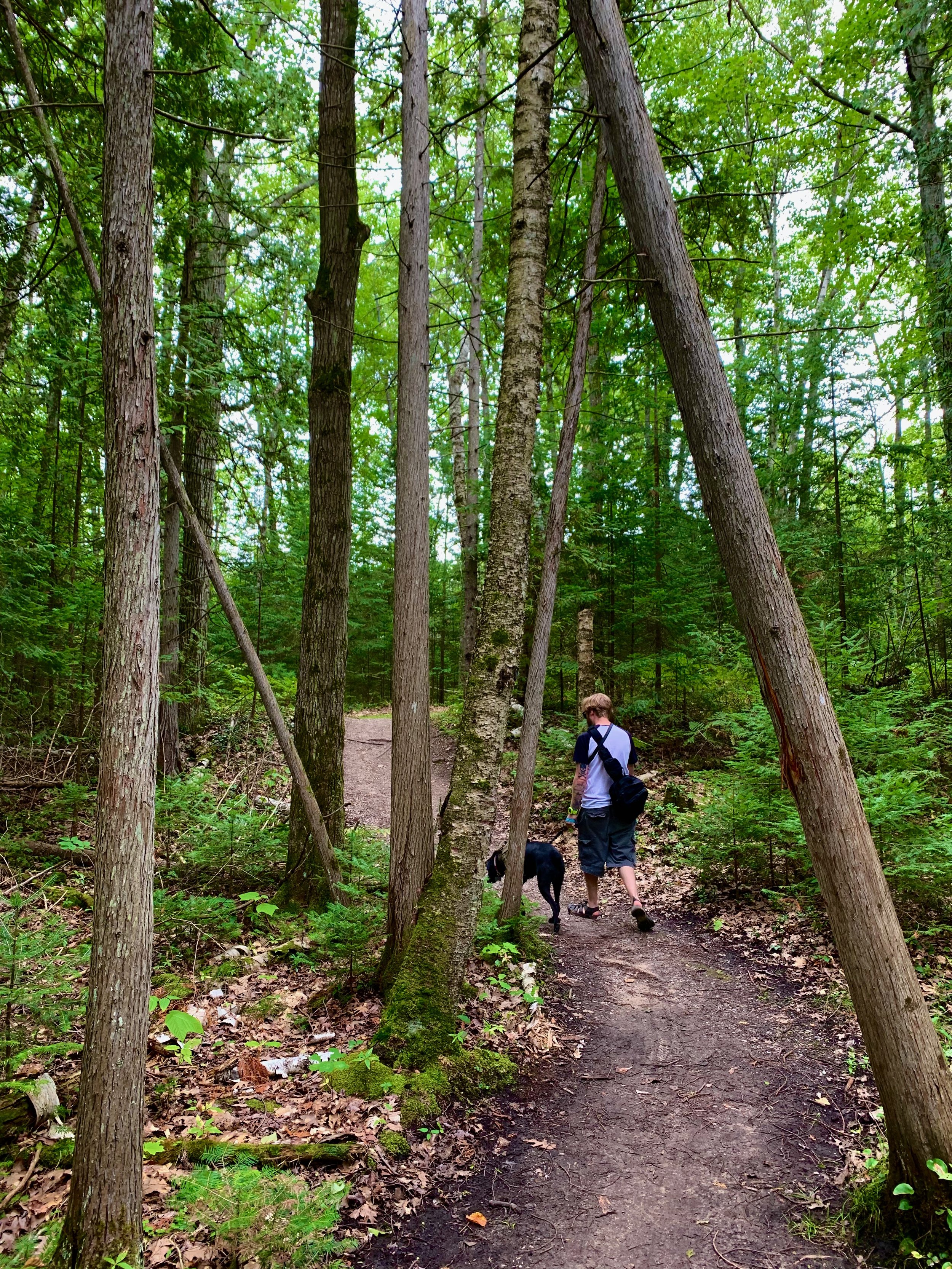
To understand the results of scientific experiments that investigate the impacts of walking on creativity, it’s helpful to understand some definitions. First, most of these experiments define creativity as ideas that have “useful novelty;” meaning an idea that’s not only new and different, but it can be applied to add value to products and services. Second, there are different types of creative thinking:
Divergent Thinking: aka brainstorming, in which lots of new ideas are generated. This type of thinking is often studied using Guilford’s Alternate Uses Task (AUT) assessment, in which participants are presented with an object and asked to come up with as many uses for that object as possible.
Convergent Thinking: generating one possible solution to a particular problem. This type of thinking is often studied using Mednick’s Remove Associates Task (RAT) test; participants are given three unrelated words and asked to identify something common among all of them. For example, “time,” “hair,” and “stretch” - an associate could be “long.”
By far the most influential and cited study on the effects of walking on creative thinking was conducted at Stanford in 2014 by Marily Oppezzo and Daniel Schwartz. In their study, the researchers tested creative thinking in proximity to walking in several distinct experiments.
In the first experiment, the researchers tested participants on divergent and convergent thinking tasks first while they were sitting and then while they were walking. The results show that walking significantly increased the participants’ divergent thinking (their ability to brainstorm multiple uses for a single object), while their performance on convergent thinking activities (finding associations between unrelated words), decreased when they walked versus when they sat.
The second experiment built on the first, this time changing up the order in which participants sat and walked, with some participants only walking and some only sitting. Here, the researchers found that not only does walking enhance divergent thinking, it does so even after the fact - aka, those who walked first, then sat and performed a divergent thinking test, performed better than those who didn’t walk first. Interestingly, though, walking for longer periods of time didn’t seem to increase creative thinking for those participants.
The third experiment compared walking indoors versus outside, and didn’t find a significant difference in creative thinking performance, but the researchers did note that people tended to be more talkative when they were walking outdoors, which may have enhanced their ability to develop novel ideas.
The final experiment sought to differentiate between walking and movement through an environment, so in this iteration the researchers introduced a participant group who were pushed in wheelchairs. Here the researchers concluded that walking, rather than environment, was the biggest influencer on creative thinking.
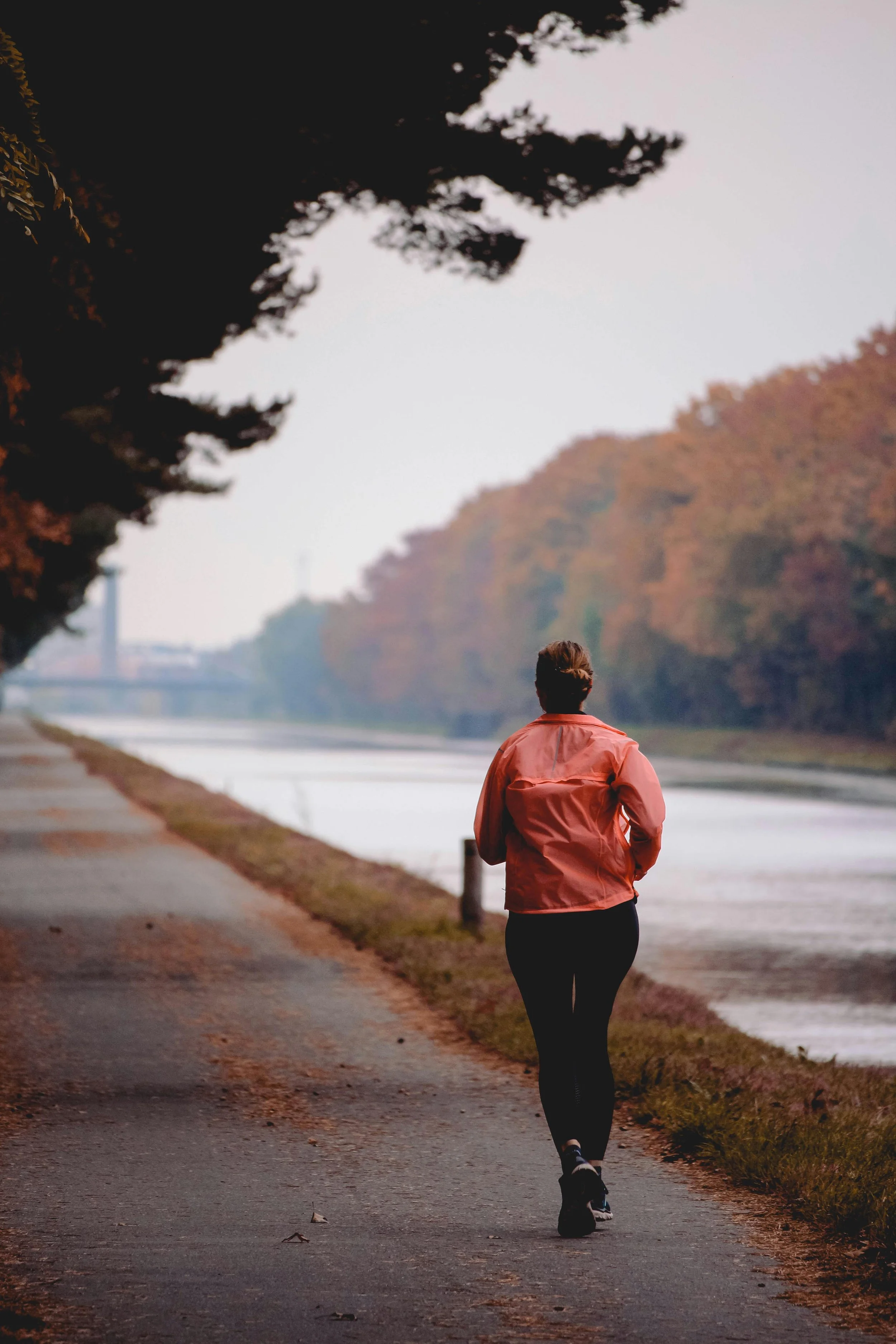
One of the major assumptions in the Stanford experiments is that the pace of walking mattered: participants were allowed to maintain their natural gait, rather than being challenged to walk at a faster pace, or walk in a location that was highly confusing; the researchers understood that walking under such conditions requires more cognitive effort. If part of your brain power is spent concentrating on how your body is moving, you have less ability to focus on other types of thought.
This assumption was proven correct by a team of scientists from the Netherlands and South Africa who discovered that different types of exercise will impact different forms of creative thinking differently depending on who is doing the exercise and how familiar they are with it; the more active thought that’s needed to perform the exercise task, the more impact the task will have on creative thinking. For their study, the researchers tested the impact of exercise in a group of athletes and a group of non-athletes.
Each participant took tests for convergent and divergent thinking, some during, and some after various exercise conditions, including high intensity cycling, moderate intensity cycling, and no movement. The study found that intense exercise enhanced convergent thinking for athletes, but impaired convergent thinking for non-athletes.
What this study helps to highlight is that while there are lots of studies that find a linkage between exercise and creativity, there’s considerable diversity among the assessments being used and who is being tested, making it difficult to say with finality, “walking improves creativity.” The more nuanced reality is that walking may improve certain types of creativity for some people.
Walking in Nature v Urban Environments
So far we’ve seen studies that verify the positive impact of nature and walking on creativity: how about putting them together?
According to Attention Restoration Theory, natural environments can help us to improve our cognitive functioning because they allow our executive attention to rest, helping our creativity become stronger after encountering nature; slipping into our sensory brain mode can help us shift through different perceptions and branch out into new areas of thought. In contrast, urban environments are taxing on our brains by continuously stimulating our attention, making urban environments less conducive to creative thinking.
In one U.S. experiment, researchers tested the impact of nature vs urban on participants’ ability to perform a task meant to utilize their short term memory: hearing a sequence of numbers and repeating them back in reverse order. Participants performed the task, and then walked either in a local park or a downtown setting, then returned to the lab to repeat the task. The study controlled for participant mood and weather conditions. The results showed that those who walked in nature significantly improved their ability to perform the memory task, more than those who walked downtown.
Walking Together
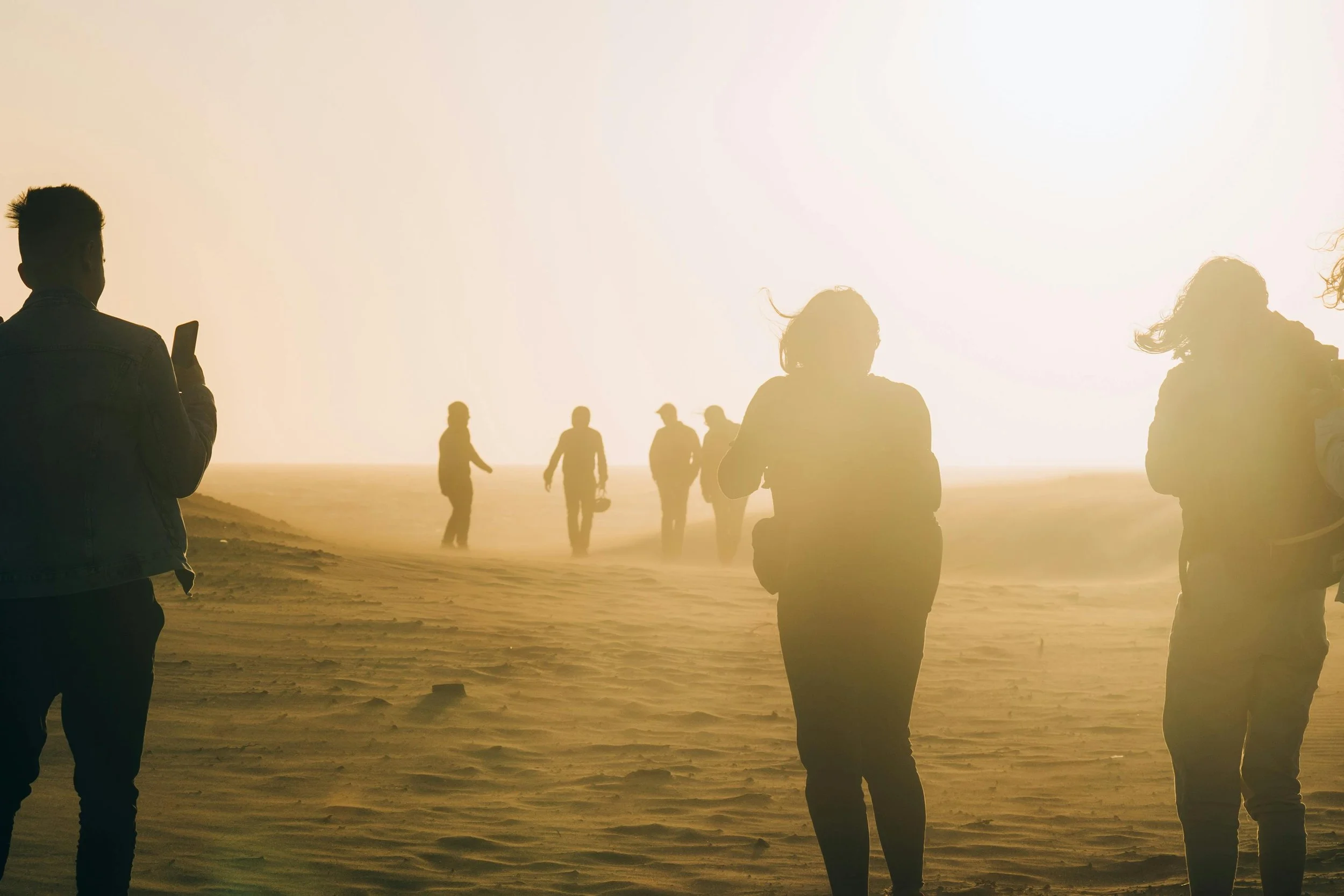
In his book, In Praise of Walking, Shane O’Mara observes that when a human baby learns to walk, their experience of the world automatically expands, allowing them to interact and engage with others in a way that they could not previously access. In fact, our brains are designed to help us not only be aware of our own movements, but allows us to accurately assess and calibrate to the movements of others, strongly indicating that walking is a naturally social activity. Throughout history, the combination of language and walking together helps humans build social bonds and shared understanding; as humans migrated out of Africa and across the world, they did so together, and today, collective walking can be seen as a way of connecting with others, as we do in say, a protest environment.
Building on this idea, a group of academics from the University of Aukland decided to design their own “writerly” walk through the countryside as a break from their stuffy desks and constant office interruptions. Rather than a solitary journey, they decided to celebrate collegiality by organizing this as a group experience, bringing together academics from across disciplines. Together they set out on a day-long excursion through a countryside, and as they walked, they discussed their various writing projects, especially commiserating over stumbling blocks they were having in their progress, hoping that the walk would inspire them to remember the joy they had in writing. At the end of their walk, the writers shared a picnic lunch, reflecting on their experiences. The event was later repeated under the banner of a “Walking, Talking, Writing event.” While not a scientific study, this event demonstrates that there is interest and benefit in walking together as a form of intellectual inspiration and a chance to unlock creativity by breaking free from the environmental constraints so many of us face in our daily work lives.
Practical Applications
So what are some of the important lessons we can take from these scientific studies to help us enhance our work life?
Tip #1
One major application of these findings is that work walks are essential if you’re trying to engage in divergent thinking; aka brainstorm novel ideas for current products/services. The science shows that divergent thinking is enhanced not only while walking, but afterward too - allowing for flexibility in terms of how and when you engage in your brainstorm walk.
Tip #2
Work walks don’t have to be long in order to be effective for enhancing short-term memory tasks and creative thinking. In fact, the studies we examined today show that engaging in rigorous physical activity can actually impair creative thinking for those of us who aren’t used to that level of intensity. Even walking at a pace that’s different from our natural gait or in a place that’s unfamiliar can take up too much of our brain power, so be mindful about how and where you choose your work walk.
Tip #3
While there isn’t a scientific study that confirms that walking together is better for creativity or health, anecdotal evidence such as the fact that many people become more talkative while walking outside and many academics and writers tout walking and camaraderie as essential parts of their creativity regimens strongly suggest that the power of your work walk may be enhanced by bringing along a coworker or a friend.
Tip #4
Studies disagree over whether walking indoors or outdoors makes a major difference in whether a walk can enhance our creative thinking, which is good news for those of us who live in climates where inclement weather can hamper our ability to walk outside. Try identifying walking routes in both indoor and outdoor spaces so that you’ll always have somewhere to stretch your brain muscles regardless of the season.
Tip #5
While many studies prove that time spent in nature allows us to rest our tired work brains in a way that can later enhance our high order cognitive functioning for tasks like problem solving and brainstorming, an undeniable anecdotal element in many of those studies is the absence of technology like a cell phone to provide distractions while participants engage with creative thinking in these spaces. When you head out on your work walk, no matter where the location, try leaving your cell phone behind and letting your brain wander naturally without additional distracting inputs.
Sources
Atchley RA, Strayer DL, Atchley P (2012) Creativity in the Wild: Improving Creative Reasoning through Immersion in Natural Settings. PLoS ONE 7(12): e51474. https://doi.org/10.1371/journal.pone.0051474
Berman et al., 2008: M.G. Berman, J. Jonides, S. Kaplan The cognitive benefits of interacting with nature Psychol. Sci., 19 (12) (2008), pp. 1207-1213
Colzato, Lorenza S., Szapora Ozturk, Ayca, Pannekoek, Justine N., Hommel, Bernhard. The impact of physical exercise on convergent and divergent thinking. Frontiers in Human Neuroscience, Volume 7(2013) https://www.frontiersin.org/journals/human-neuroscience/articles/10.3389/fnhum.2013.00824
Jabr, Ferris. (2014, September 3). Why Walking Helps Us Think. The New Yorker
O’Mara, Shane. In praise of walking : the new science of how we walk and why it's good for us. Random House Group. 2019.
Oppezzo, Marily & Schwartz, Daniel. (2014). Give Your Ideas Some Legs: The Positive Effect of Walking on Creative Thinking. Journal of experimental psychology. Learning, memory, and cognition. 40. 10.1037/a0036577.
Trine Plambech, Cecil C. Konijnendijk van den Bosch, The impact of nature on creativity – A study among Danish creative professionals, Urban Forestry & Urban Greening, Volume 14, Issue 2, 2015, Pages 255-263, ISSN 1618-8667, https://doi.org/10.1016/j.ufug.2015.02.006.
Trofimova, Evija. (2017, December 8). Academics Go Walking, Talking, Writing. University of Aukland.
https://www.writing.auckland.ac.nz/2017/12/08/academics-go-walking-talking-writing/
Ulrich, R.S. (1993) Biophilia, Biophobia, & Natural Landscapes. In: Kellert, S.R. and Wilson, E.O., Eds., The Biophilia Hypothesis, Island Press, Washington DC, 73-137.
Wharton Executive Ed NanoTool: ENHANCE DECISION MAKING AND PROBLEM SOLVING BY WALKING. https://executiveeducation.wharton.upenn.edu/thought-leadership/wharton-at-work/2018/09/decision-making-and-problem-solving-by-walking/
Ward, Thomas. (2017, March 8). Can a Simple Walk Improve Your Creative Thinking? Psychology Today. https://www.psychologytoday.com/us/blog/creativity-you/201703/can-simple-walk-improve-your-creative-thinking
