
Attention Restoration Theory
At The End of the Work Day…
Many working professionals are familiar with this feeling: after I get home from a long day at work - making decisions, solving problems, having conversations - I’m exhausted, and all I want to do is zone out: maybe I watch tv, maybe I have a beer, maybe I scroll on my phone. I don’t want to do anything complicated; I don’t want to think anymore: I just want to rest my brain.
This desire to “zone out” at the end of a long day demonstrates the distinction that psychologists since William James have long made between voluntary attention (the type of thinking that requires concentration and effort) and involuntary attention (a much more passive, sensation-based type of thought), the former of which zaps our energy and the latter of which allows us to rest.
What if you could take that “zone out” feeling and supercharge it to recharge your brain? A super-recharge? I’ll workshop the name, but the point is, there is a very simple, very healthy, very free way to unwind after a hard day of thinking, and that’s nature.
Introducing the Theory
The Attention Restoration Theory (ART) was developed by psychologists Rachel and Stephen Kaplan based on their decades of research on people experiencing nature. The Kaplans theorize that in today’s world, we are inundated with technology and information - lots of stuff that we’re asked to put our attention toward - and it wears us out. Our brains need a break, and the modern world isn’t necessarily equipped to achieve that very easily. Kaplan points out that before technology, workers were more aligned to nature’s rhythms and basically forced to take a break - the sun would go down, and we couldn’t see enough to continue working.
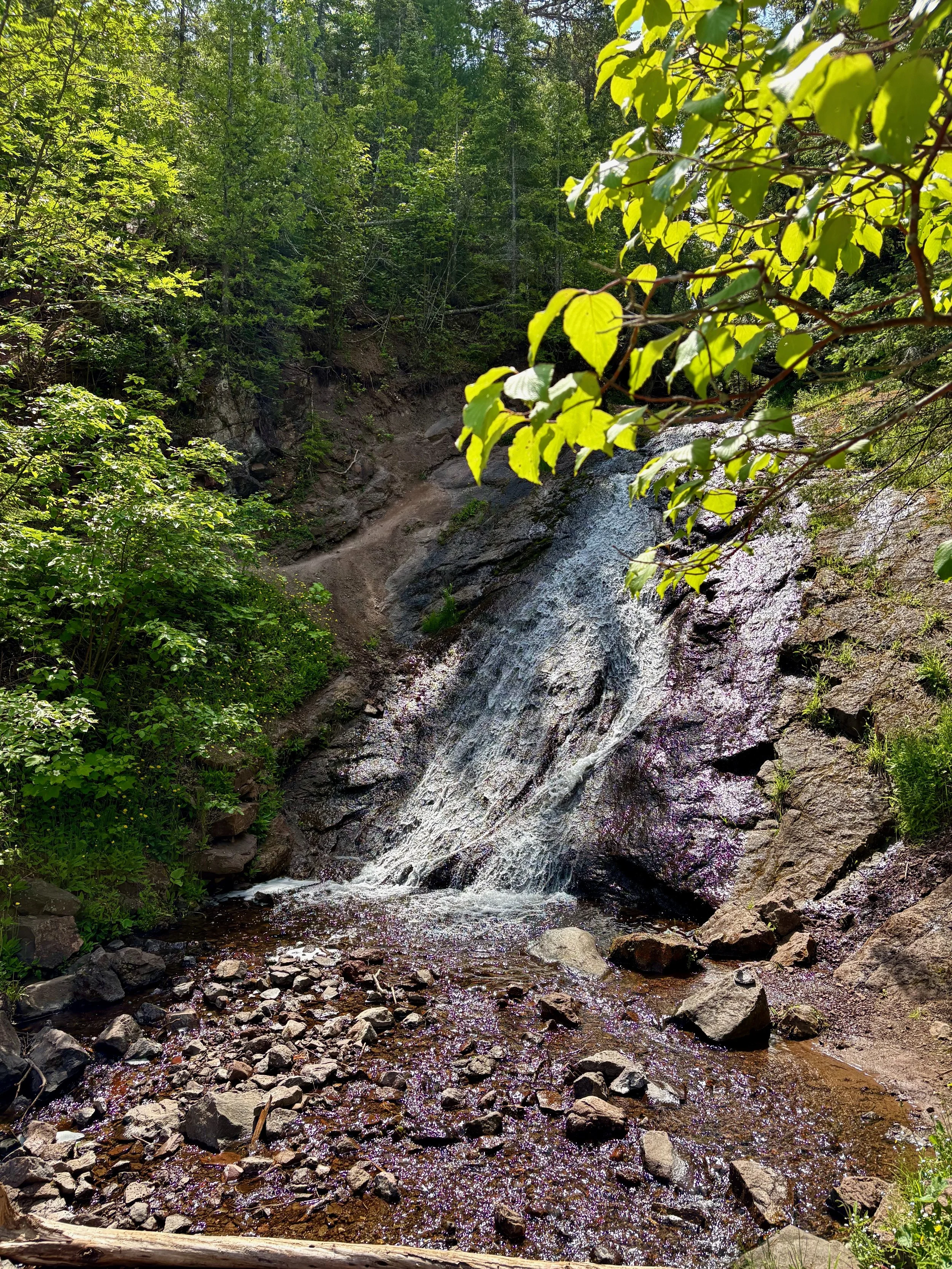
When we’re at work, our brains engage in high level tasks like goal-setting, brainstorming, and generally just dealing with the constant deluge of information; fancier words for this are directed attention, or executive attention. This type of attention is a complex set of mental functions involved in selecting and prioritizing information and fending off distractions; it’s in limited supply and when we run low, we don’t perform at our best: we aren’t as creative, we can’t focus as well, we make more mistakes, and planning becomes difficult.
ART says that when we spend time in the natural environment, we are able to turn down the parts of our brains that we use for executive attention and flip into something like auto-pilot, where we don’t need to pay such active attention, and our brains are able to rest.
Some scientists theorize that the brain, just like any muscle, benefits from a training regiment not unlike a physical workout we might do at the gym. While some evidence shows we can bulk up our brains in certain types of tasks, the jury is still out on whether these types of exercises keep our brains healthy in a general way like exercise does for our bodies.
The Kaplan’s research on nature as rest for our brains began with lab experiments involving pictures of nature and evolved to field studies out in the wild, like a wilderness program they hosted in Michigan’s upper peninsula. Through studies like these, the Attention Restoration Theory identifies 4 important components to successful brain restoration:
Being Away: this is in many respects as literal as it sounds; it’s essential for us to step outside of the environments and thoughts that regularly tax our brains
Extent: not only must we be away, we must also be in a place that is big enough for us to feel like it’s “a new world,” and we are connected to it as a smaller part of a larger whole
Fascination: this one is a delicate balance; the environment has to be interesting enough to keep our attention, but not so stimulating as to demand our attention beyond just walking around and appreciating it
Compatibility: the environment has to be conducive to the activity we’re trying accomplish (like a path through the woods), and we know how to do that activity (like walking on a path through the woods); other aspects of compatibility are things like feeling safe in the environment, lack of distractions, and easy to understand.
ART says that a restorative environment doesn’t necessarily have to be nature, but nature is a particularly good restorative environment because it often readily contains all four of these essential ingredients for a rested brain. That’s an important point about ART, in fact: it’s not that nature itself is inherently restorative (heck, I can name many experiences in nature - often involving mosquitoes - that were the exact opposite of relaxing) but that nature provides an opportune backdrop for the type of mental processes that our brains prefer when we’re worn out.
Theory In Action
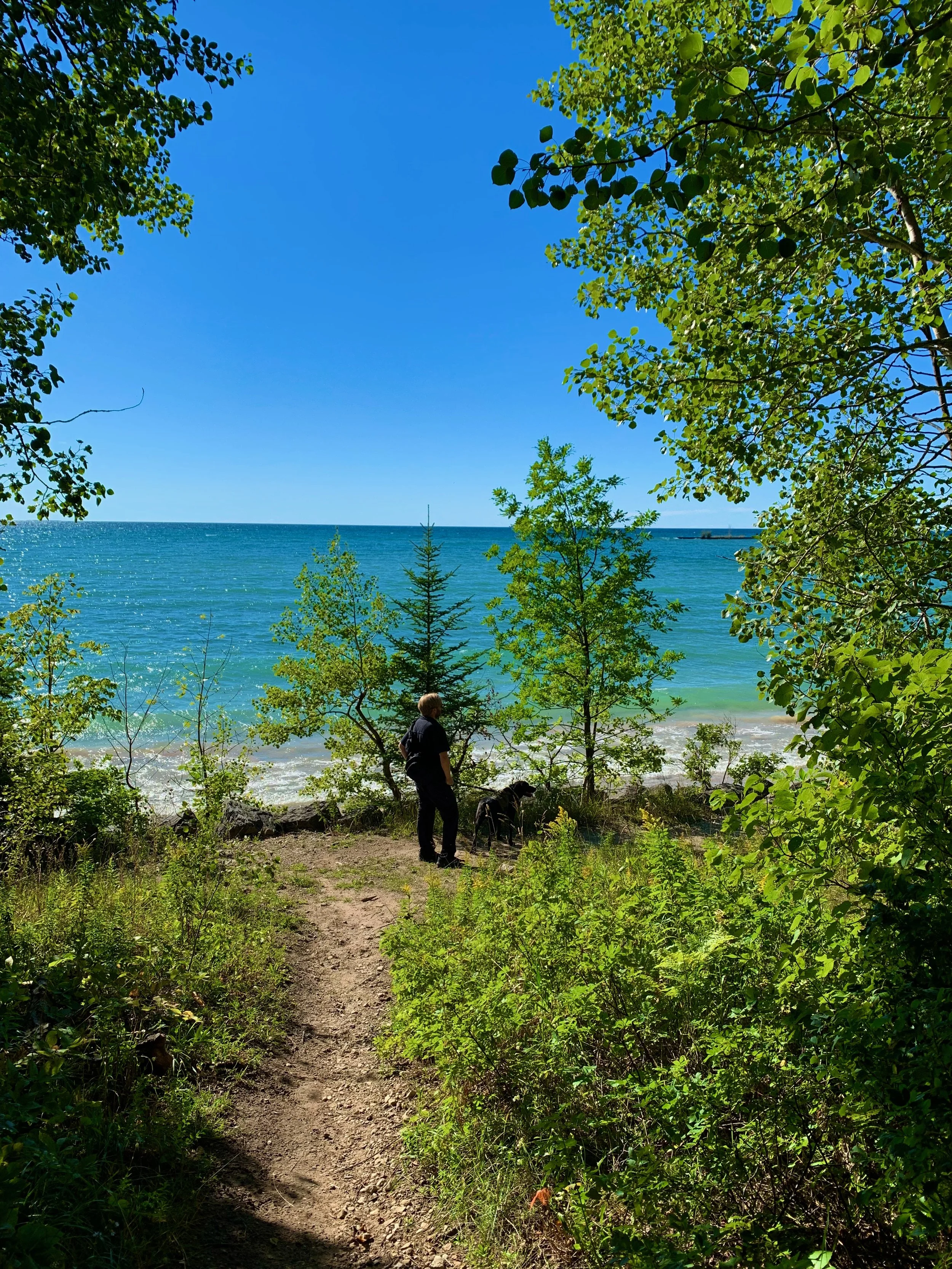
There are lots of studies on the effects of environment on mental fatigue and restoration, many of which are in alignment with ART in finding that nature produces restorative effects at varying degrees. One study at the University of California sought to test both the short-term exposure to nature via a 40-minute experience and also longer-term exposure via a 4-7-day vacation.
In the long-term exposure study, all participants were experienced backpackers of similar physical fitness and attitudes toward nature. They were split into three different groups and tested before and after their experience for overall happiness as well as how well they performed on a proof-reading activity (aka, an activity requiring executive attention).
Group 1 went on a wilderness vacation; tested pre-trail and post-trail
Group 2 went on an urban vacation; tested pre-activities and post-activities
Group 3 stayed home and did regular routine, tested before and after the 4-7-day period
All groups performed relatively equally on the proof-reading task prior to their assigned experience, but Group 1 performed significantly better on the task after their experience on the trail than the other two groups in their respective activities. Group 1 showed an initial dip in their mood upon return (it seems that everyone gets the post-vacation blues), but when their mood was tested 21 days after they settled back into their daily lives, they showed a significant bounce back in their mood when the other groups did not.
To test the short-term capabilities of nature as restorative, the researchers asked their test participants to do a bunch of activities similar to the proof-reading assignment, designed to tire out their brains. After that, the participants spent 40 minutes on one of three experiences:
Group 1 went on a nature walk
Group 2 went on a walk in an urban area
Group 3 relaxed in the lab with light reading materials
Group 1 was shown to have greater restoration than either of the other two groups. Additionally, the researchers were able to conclude from both studies that the element of being away alone was not sufficient for the participants to feel rejuvenated - all aspects of ART were needed for the full benefits to be felt.
Many studies like these show that a short time in nature is restorative, and longer and more immersive experiences are even better: the more restored the brain can get, the more lasting these positive effects will be. Still, more work can be done on the nuances of these findings since there are lots of factors that can potentially impact results: things like whether someone is already good at the assigned task vs doing it for the first time, and people’s personal preferences.

Practical Applications of Attention Restoration Theory
How can you apply lessons from the empirical data about nature’s ability to restore our tired brains? Here are some ideas.
Idea #1
Advocate for nature-adjacent breaks and break spaces. ART provides a well-accepted framework and justification for workplace enhancements like the incorporation of natural elements into office design and the necessity not only for breaks, but for break spaces and opportunities that can offer employees the ability to experience nature (i.e. all 4 of the essential elements of ART), increasing productivity, and creativity, while decreasing mistakes.
Idea #2
When you feel yourself particularly depleted, take a walk through a nearby park or take your lunch break close to a naturescape. Rather than continuing to tax your brain with technology or more information, try focusing on your 5 senses in the nature around you; allow your brain to slip into involuntary attention.
Idea #3
Plan your next vacation to a destination that fulfills the 4 essential ART ingredients: being away, extent, fascination, and compatibility. Even though you might feel the classic post-vacation blues, being intentional about choosing a place where you can experience nature for extended periods will allow you to feel greater resiliency after returning to the grind.
Idea #4
In crunch time, when we can’t take long breaks or vacations from work, we can still allow for short periods of brain rest or at least less taxation on our executive attention by incorporating nature into our work routines. Try having your next meeting while walking around the nearby grounds, or hold a brainstorming session outside with the sun and bird sounds can.
Sources
Ackerman, Courtney. (2018). What is Kaplan’s Attention Restoration Theory (ART)? PositivePsychology.com. https://positivepsychology.com/attention-restoration-theory/
Hartig, T. A., Mang, M., & Evans, G. W. (1991). Restorative effects of natural environment experience. Environment and Behavior, 23, 3-26.
James, William. (1890) The Principles of The Principles of Psychology. Henry Holt and Co.
Kaplan, Stephen. (1992). The restorative environment: Nature and human experience. In D. Relf (Ed.) The role of horticulture in human well being and social development. Portland, OR: Timber Press. Pp. 134-142.
Pham, Teresa P. and Sanocki, Thomas. (2024). Human Attention Restoration, Flow, and Creativity: A Conceptual Integration. J Imaging. 2024 Mar 29;10(4):83. https://www.mdpi.com/2313-433X/10/4/83
