
Many empirical studies have confirmed that healthcare facilities tend to elicit high levels of stress for patients as well as for their families. Additionally, empirical studies continue to confirm the positive benefits of nature exposure, especially its ability to reduce stress. For these reasons as well as aesthetics, modern day design of healthcare facilities often include gardens intended for therapeutic purposes. Not all therapeutic gardens are created equal; there are important factors to consider when designing these spaces for maximum health benefits, and at worst, well-intentioned landscape architects may create inadvertent harm when these factors are ignored. Whether you work in a healthcare facility, or just spend time there as a patient or a visitor, you can learn a lot from what science has to say about the benefits and best practices for these unique spaces.
Why Therapeutic Gardens
As we’ve seen in other articles, a growing body of empirical studies confirm that even viewing images of nature have been shown to elicit positive emotions and reduce stress, particularly in individuals who are currently experiencing a high level of stress, and particularly in comparison to urban views. Several scientific theories exist that explain the mechanics of this: Prospect Refuge Theory says that we are drawn aesthetically to settings that include features that enable our survival. Stress Reduction Theory explains that nature views elicit positive emotions, which leads to lower stress. Attention Restoration Theory describes the ways in which nature helps our brains turn off directed attention and slip into the more relaxed state of involuntary attention, leading to restoration. All of these theories are backed by numerous empirical studies, many of which test images of nature with stressed populations to affirm nature’s powerful results.
While images of nature have been shown to go a long way toward wellbeing, many studies have also confirmed that physical proximity to nature goes even further. Building on the numerous empirical studies that have proven the health benefits of forest bathing, including stress reduction, boosted immune system strength, improved cardiovascular function, lowered cortisol levels and increasing serotonin levels, and improved sleep, government agencies in Japan and South Korea have adopted forest bathing as an official practice to promote walking and health. Sunlight exposure, too, has been proven in many studies, especially those of aging people or cancer patients, to increase vitamin D, which is critical for bone density. The importance of smells to trigger emotional responses, reduce stress, and lower blood pressure has been the focus of many empirical studies, including one that showed the smell of Windex impacted respondent’s willingness to donate money. Qing Li, a forest bathing researcher, has proven that the presence of high concentrations of phytoncides and volatile organic compounds (compounds emitted by trees (especially cedar and cypress trees) and other organic matter into the air) seems to impact NK cell number and activity. NK cells reportedly kill tumors and virus-infected cells in the body, contributing to overall immune health. Studies have also shown that nature sounds can lead to stress recovery, and the presence of live plants in schools, hospitals, and offices has been shown to increase health, concentration, productivity, and satisfaction.
Important Characteristics for Therapeutic Gardens
According to Roger Ulrich, there are four characteristics that enable stress reduction in a natural setting:
Sense of Control: it’s important for therapeutic gardens to include wayfinding, and options that allow people choices for where they will go and what they will do
Social Support: therapeutic gardens must include ample seating arranged to facilitate social interaction
Physical Movement and Exercise: therapeutic gardens must include destinations that encourage movement
Positive Natural Distractions: a therapeutic garden should provide sensory experiences for its visitors, especially in the form of sights, sounds, and smells. The space should be a sensory contrast to the stark interior of the healthcare facility.
Additionally, Rachel and Stephen Kaplan have identified important design principles that enable attention restoration in a natural setting:
Coherence: our brains like orderly, organized natural spaces that are easy to see and make sense of
Complexity: in order to invoke a sense fascination, it’s important for the natural space to provide lots of opportunities for sensory engagement
Legibility: natural spaces must include memorable elements that help us keep track of where we are as we move through it
Mystery: this element helps inspire exploration and discovery; we enjoy pathways that partially conceal what’s coming next
Additionally, a patient’s enjoyment of a therapeutic garden, as with a hiker’s enjoyment on a nature trail, is in some ways the result of the placebo effect: when we believe a place will heal us, we feel better being there. When we feel stressed, we seek places that we already have positive associations with, which, in and of itself, helps those places feel restorative to us.
Garden Design Considerations for Various Populations
In order to achieve the characteristics listed above, all therapeutic gardens should follow these general design guidelines. Therapeutic gardens should:
Be distinctive from the interior of the healthcare facility
Provide opportunities for both sun and shade
Provide enclosures either with the buildings or with fences in order to develop a sense of privacy
Provide adequate wayfinding, including distance markers if the space is big enough
Provide a covered seating area near the garden entrance
Make sure that the layout is legible from the entrance
Create subspaces with different qualities
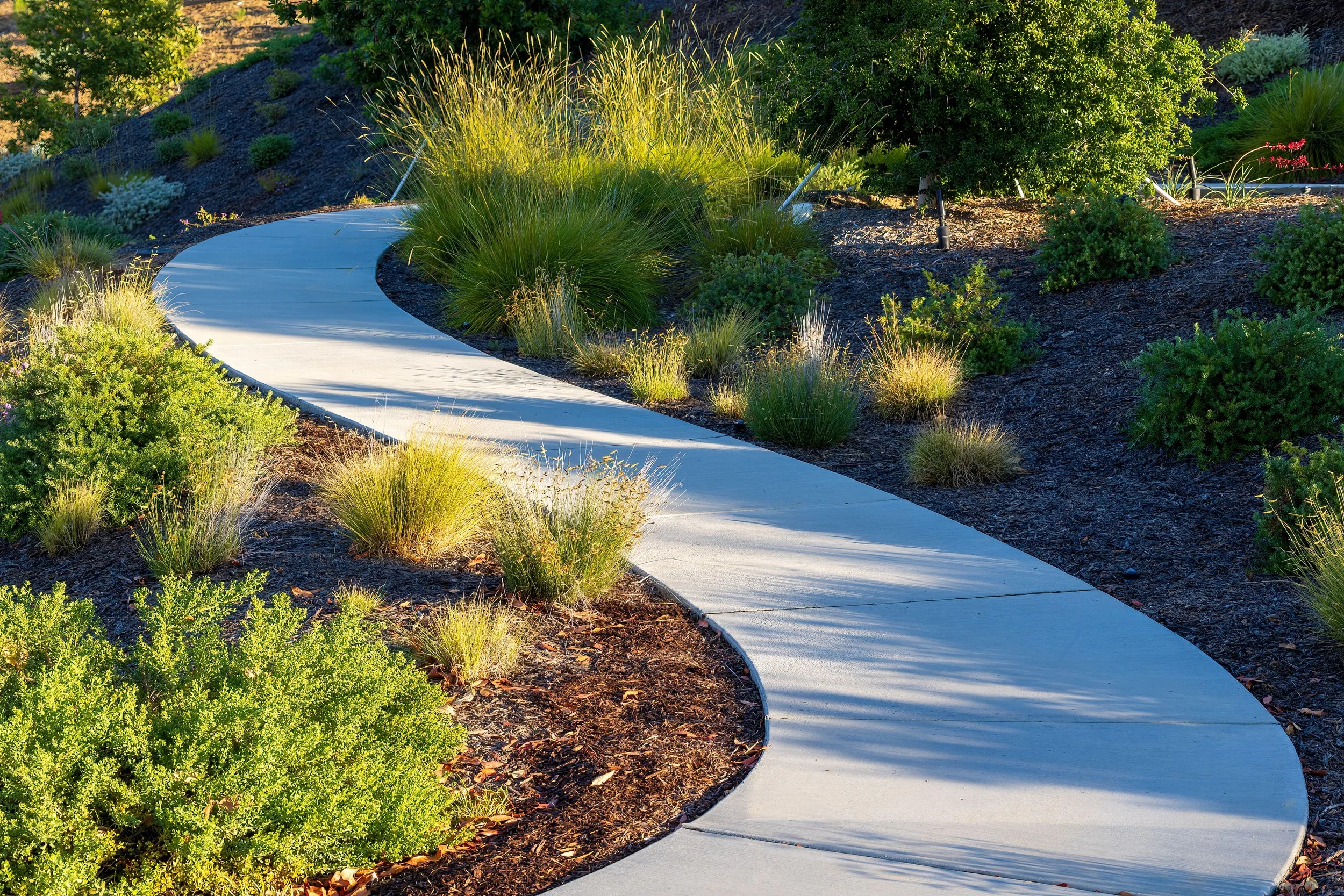
Consider accessibility of wheelchairs and other modes of assisted movement; curvilinear pathways are easier for wheelchairs to use
Make sure it’s clear that all are welcome
Prohibit smoking
Make provisions for experiencing the garden in good and bad weather, at any time of day or night
Utilize vegetation that reflects the geographic region to create a sense of place
Provide opportunities for people to lie down
Provide naturalistic sounds like running water
Include an open space big enough for larger gatherings
Make sure exercise areas are away from the main activities
Create a destination point like a gazebo
Enable easy visual access: people need to be able to see the garden and understand how to get to it
Ensure that patients can see it out a window while lying in bed
Provide aesthetic lighting
Provide flat, smooth pathways: slopes should be no greater than 2%, pathways should be long and provide lots of spots to rest, and there should be appropriate traction on the path
Include signs that tell people about the space and invite them to use it
Consider insect control
Maximize contrast between light and dark on the ground plane
In addition to the standard design elements above, therapeutic gardens at facilities designed for specific audiences need additional considerations.
Children’s Hospital Gardens
These gardens create a design challenge due to the variety of their audience, which include child patients and also their families, visitors, and those caring for them. As a result, the most effective children’s hospital gardens actually include multiple gardens, each designed for different purposes. In the children’s area, it’s key to include elements that allow them to interact and play.
Gardens for Cancer Patients
Despite the prevalence of cancer, there aren’t currently many studies that examine the specific benefits of nature to cancer patients. One study of newly diagnosed breast cancer patients found that those who spent at least two hours per week exposed to nature had significant improvement in their directed attention compared to those who didn’t. Another study of breast cancer patients revealed that these patients often specifically name time in nature as a significant aspect of their recovery process. When designing therapeutic gardens for cancer patients, it’s key for these spaces to provide a significant contrast from the stark interior setting where they’re receiving treatment. Additionally, an emphasis on shade, privacy, opportunities to walk, and picturesque views are recommended elements, while pungent plants in particular should be avoided.
Gardens for the Frail Elderly
Aging populations in the United States are entering assisted living facilities at an increased rate, so these facilities in particular offer opportunities for therapeutic gardens that specifically benefit this population’s unique needs. The important physical and psychosocial health needs of the elderly include loss of muscle mass and bone density, balance problems, difficulty sleeping, increased boredom, helplessness, and susceptibility to depression. Therefore, therapeutic gardens designed for the elderly should provide ample opportunities for exercise - especially walking - and sunlight exposure, which can increase vitamin D, an active element in bone density strength, and opportunities for an increased sense of choice and control. Spending time outdoors can help soothe patients with seasonal affective disorder, and the increased opportunity for social interaction provided by a garden can help improve psychosocial health. Therapeutic gardens for the elderly should provide shade, safety, and accessibility while balancing the need for independence and movement; these gardens should cater to a range of physical abilities and be flexible enough for modification over time. Some facilities are short staffed, so residents aren’t able to go outside as much as they’d like, so the therapeutic gardens at these facilities should at the very least be visible from resident windows. It’s also critical for these natural spaces to resemble domestic gardens: the elderly need to feel that the space is familiar and they belong there.
Gardens for Alzheimer’s and Dementia Patients

Dementia and Alzheimer patients often experience symptoms including: hallucinations, delusions, depression, physical aggression, pacing, wandering, and sleep disorders. These symptoms have proven treatments involving security, stimulation, companionship, and making the most of people’s strengths. These patients often do better in smaller, homelike facilities, and they are very impacted by their environment because of their lack of ability to impact it themselves. Therapeutic gardens in these facilities should offer both residents and staff exposure to fresh air and sunlight, opportunities for exercise and socialization, and chances to engage in familiar activities like gardening and bird feeders. In one study of nursing records at an Alzheimer's garden, residents who spent as little as 10-15 minutes in the garden every day showed significant improvements in things like aggressive behavior, the need for medication, pulse rate, blood pressure, and weight change. Taking patients outside regularly can also help reduce their need for pacing and escape, and facilities with gardens experience less violent outbursts than facilities without. A few of the specific design parameters for memory patients include:
Dementia changes people’s ability to mark time without external cues, so it’s critical that the garden be visible from indoors so that residents can experience hours and seasons more easily
Any barrier to entry, like if the garden is too far away or the doors are too heavy, will easily lead to patients giving up
Make sure staff can view it from their work area, so that patients can go out on their own. The garden should have a single entry door that is either auto-open or has a handle that makes it easy to open, kept unlocked as often as possible. Often just knowing the door is unlocked helps calm patients’ wandering and confusion.
Alzheimer patients are most comfortable when the full area can be seen at once - so that they don’t feel there are unsafe spaces
It’s especially important to match the garden to the local culture for memory patients
Bright morning sunlight and vitamin D is especially important for dementia patients, so make sure the garden is accessible in the morning
Alzheimer’s patients often become more agitated in the afternoon; when the sun casts shadows, it can be disorienting for them: pay attention to shadows in the garden
Shade is especially important in these gardens because these patients have trouble recognizing when they’re too hot
Provide features that might evoke positive memories
Elopement is a constant problem for memory patient staff to manage, so the garden should be secure on all sides but not to the point that it feels fenced in. Make sure fences are too tall to climb over.
Where possible, encourage residents to help with the care of the garden
Dementia often leads to disorientation because it erodes the ability to make mental maps based on past experience; forks in the pathway can be agitating. Provide markers, landmarks, and interesting elements along the pathway—such as bird feeders, a weather vane, garden ornaments, a wheelbarrow full of flowers: it’s hard for dementia patients to remember places and sequences of places
A level pathway is also important for these patients because their motor function can often get impaired
For those patients who are more physically active, challenges like a ramp can be useful
Avoid toxic plants and plants that are harmful to touch because memory patients can revert to childlike behavior like grabbing things and putting things in their mouths
Include plants that were popular when the patients were young, from the culture they know
Memory patients often have trouble sleeping, so there should be good lighting in the garden as to allow night walks
Gardens for Hospice Patients
Many people feel a sense of wanting to return to nature as they come closer to death, so hospice gardens tend to be very well supported and large in scale, but there are very specific design elements that should be adhered to for hospice patients. For example, people don’t want anything that can be considered scary or complicated when they’re near death; most people want to die at home, so making the space as homey as possible is key. The space should be a blend of familiar and unique, to enable reflections on transcendence. Where possible, private gardens are essential for these patients, and the gardens should provide opportunity for both patients and family to feel they can get away. Exposure to air, sky, sun, and soothing nature sounds are important for patients near death. Dying patients also tend to report feeling comfort and distraction when able to view wildlife, so bird feeders should be prevalent, as well as water that can attract wildlife. Additionally, interactions with animals are shown to have therapeutic value, so there should be a space for visiting pets. Smell is one of the last senses to leave before death, so fragrant plants like lavender and rosemary, as well as aromatic herbs like sage, thyme and lemon balm can be especially important in hospice gardens.
Gardens for Veterans
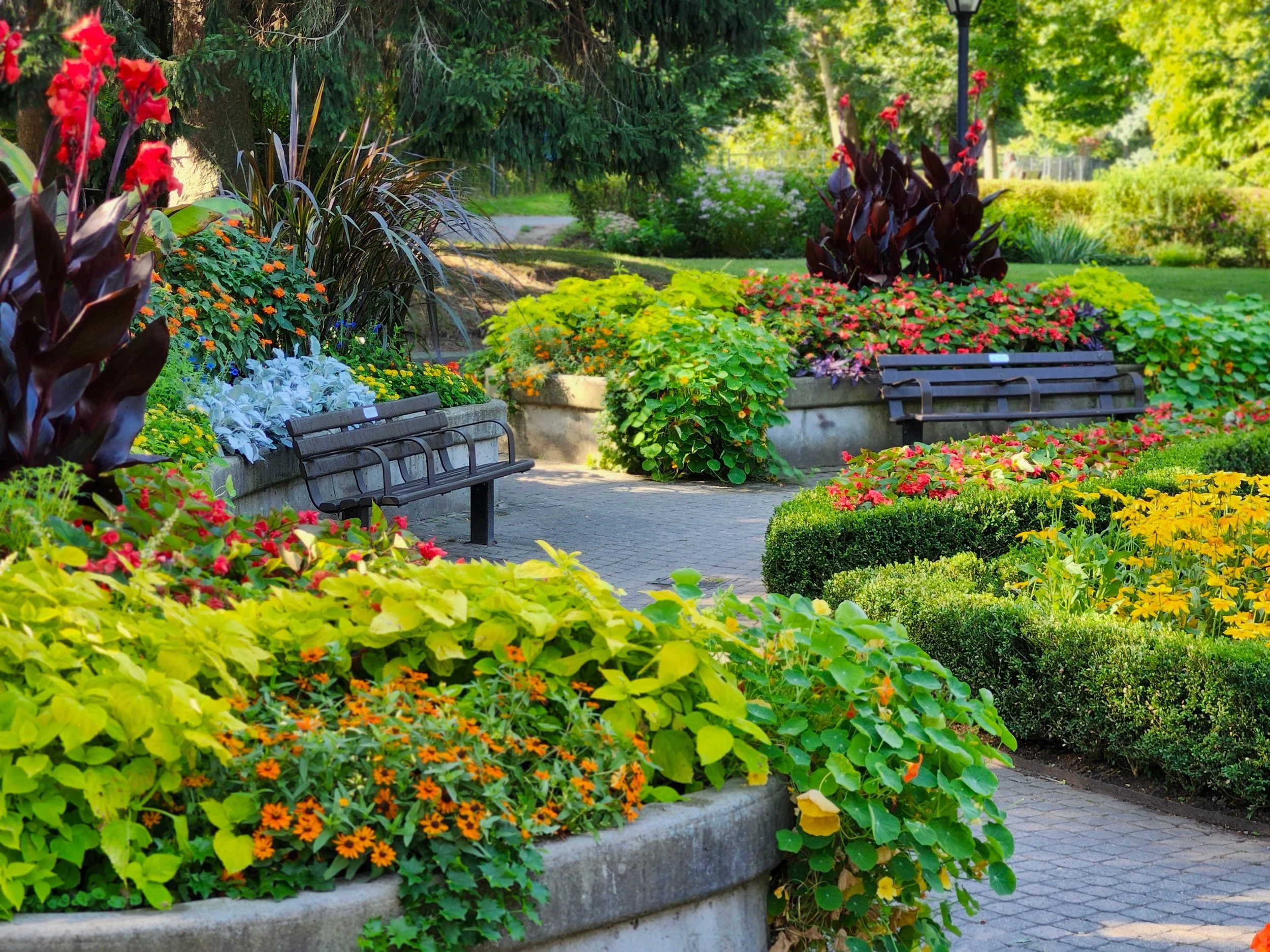
Many veterans return with severe and varied injuries, both physical and neurological, making their needs in a therapeutic garden very specialized. In a survey of veterans asking about their ideal outdoor space, 68% named water as an important element; also they tended to prefer an open as opposed to enclosed space, with few sound distractions like traffic, barking dogs, or helicopters, and temperature regulation. In one garden designed for veterans, red and orange flowers were avoided because they reminded users of blood and explosions; pathways were a warm brown color to prevent glare; a raised bed around an oak tree to serve as a place to rest for those with an unsteady gait; there were clear sightlines; and spaces—including the custom benches—were designed to reduce fear that bombs might be hidden there: the benches were high-backed, set against walls, and cantilevered. Working with plants is a well known therapeutic exercise; for veterans, who are used to working as a team toward a goal, activities that allow them to develop a sense of mastery can be very healing. Other considerations for gardens for veterans include:
Design for these gardens must be flexible and easy to change based on feedback
Opportunities to feel in control is especially important for those with injuries that strip them of that - choices on where to sit, to walk, to spend time
Garden should be fully accessible, and also designed with physical challenges
Physical and emotional safety is paramount for this population
People who have engaged in combat, especially those with PTSD, need to feel safe: there is a need for a space that provides privacy and some degree of enclosure without provoking feelings of claustrophobia.
Many antidepressant and antianxiety medications cause light sensitivity, so creating shade is very important. Contrasts in light and color can be unsettling too, so avoid that as much as possible.
A sense of home can be very important when helping veterans transition into these spaces
PTSD can cause people to choose to isolate, so there should be space to be alone as well as to gather
Places for ritual and reflection, like a memorial, are especially important for this population
Make sure to create some space for visiting children to play
A high percentage of veterans have service dogs, so making sure the space can accommodate this
The garden should also allow smoking areas: smoking is very important for some veterans
Rehabilitation Gardens
Traditionally, rehabilitation activities for patients recovering from stroke, brain injuries, or mobility problems have been conducted indoors in a gym-like environment, but increasingly these exercises are being moved outdoors. For this particular purpose, it’s vital that the caregivers have input into the design and development of the garden because specific space and equipment is needed. Things like lush vegetation, benches with backs, movable seating, convenient access, and continuous maintenance are all required in spaces that will be used for rehabilitation purposes.

Maintenance and Business Case
At its core, a garden is a living system, so designers must pay attention to the essential elements that allow plants to thrive: sunlight, soil, water, and nutrients, and must provide consistent, high quality maintenance so that the space doesn’t fall into disrepair, which can be an especially damaging condition for therapeutic gardens. In the best case scenario, the design of the garden includes attention both to the requirements of plant upkeep as well as the specific therapeutic uses, and dedicated gardeners trained in the maintenance of these elements should be employed to carry that vision forward. The very best therapeutic gardens are those that benefit the patient audience while also establishing a sustainable plant and water ecosystem that allows for nature to thrive. Empirical studies like Ulrich’s that can prove the benefit of nature exposure are instrumental in building the business case for the development of therapeutic gardens in healthcare facilities: improved patient health and wellbeing, significant stress reduction, and increased patient satisfaction are outcomes that have been proven many times in many different research studies.
Practical Applications
Since the bulk of this article has highlighted practical tips for the design of therapeutic gardens, I won’t regenerate that list, but invite users of therapeutic gardens, whether patients or visitors, to notice, appreciate, and actively engage with these natural spaces in the facilities you encounter. If you donate to or volunteer at healthcare facilities, consider specifically routing your resources and/or time toward the maintenance of these important gardens.
Sources
Marcus, Clare Cooper, and Naomi A. Sachs. Therapeutic Landscapes : An Evidence-Based Approach to Designing Healing Gardens and Restorative Outdoor Spaces, John Wiley & Sons, Incorporated, 2013.
Ulrich, R. S., C. Zimring, X. Zhu, J. DuBose, H.-B. Seo, Y.-S. Choi, X. Quan, and A. Joseph. 2008. “A Review of the Research Literature on Evidence-Based Healthcare Design.” Health Environments Research and Design 1 (3): 61–125.
Ulrich, R. S., C. Zimring, X. Zhu, J. DuBose, H.-B. Seo, Y.-S. Choi, X. Quan, and A. Joseph. 2008. “A Review of the Research Literature on Evidence-Based Healthcare Design.” Health Environments Research and Design 1 (3): 61–125.
