Aesthetic Responses and Preferences to Natural Environments
Involuntary Response
Have you been in this situation at work: we realize we need to grab something, and we head to the storage closet, or the basement, or wherever it is in our workplace that supplies are kept. The space is isolated and quite, maybe a little dark and dingy, and as we hunt around in its depths, our spidey sense pings when we hear a rustling sound somewhere; the hairs on the back of our neck stand up, our eyes get wide, our pulse quickens. We think, “it’s creepy down here.” We grab whatever item we came for and bolt out of there.
Maybe you’ve had a similar sensation while walking outdoors. Or on a city street. The human brain is designed to protect us: we become aware of danger before we consciously realize it. The same, it turns out, is also true of positive responses when we encounter an unfamiliar environment: our brain takes in information and cues our body to know whether we favor this space even before we can recognize the conscious thought. This is true for the natural environment, and leads us to have involuntary responses and inclinations toward certain environments over others.
The Framework: How Do We Take In Information from Our Environment?
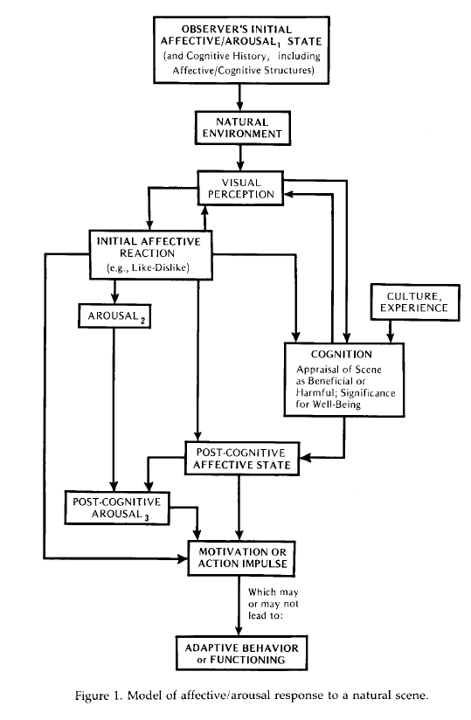
To ground ourselves in the science, let’s first take a look at Roger Ulrich’s model of affective response to natural scenes. (For the visual, see the end of the article). In it, he charts out the specific, intricate steps our bodies go through when we encounter stimuli in the world around us. For this example, let’s say that’s a local park.
Step 1 is our head space before we even encounter the park. Ulrich emphasizes that our emotional state and level of stress, as well as our knowledge and experiences, greatly influence the way that we’re going to perceive this park.
Step 2 (and this part’s really interesting): humans’ emotional response to environmental stimuli proceeds our cognitive appraisal of it; aka, we can like or be afraid of something before we consciously understand what it is - it’s the instinct that causes us to run when hear a rustle in the grass before we know whether it’s a lion or bunny. In this framework, when we see the park, it first triggers an involuntary emotional response (we either like it or we dislike it).
This is closely followed by Step 3: a stress or relaxation (arousal), followed closely by Step 4: our conscious thought processing of what we’re seeing, which is greatly influenced by our past experiences and the culture we were raised in.
In the steps after that, we piece all of this information together and experience the impulse for action. This entire process is considered to be adaptive, meaning that we’re learning every time we experience this interplay between what we see and how it makes us feel, think, and act.
(As an aside: this adaptive aspect forms the basis for the concept of biophilia, which I cover in another article; some researchers hypothesize that humans who were better at performing this complex set of brain functions in relation to the natural environment were more likely to survive and pass down those traits to their kids; hence the "evolution" in the Psycho-Evolutionary Theory.)
One illustration of Ulrich’s framework above is this: as we walk down the street heading to the park, we may be exhausted from a long day at work. As we round a corner and catch sight of the beauty of the park, we may be inspired to rally a bit more energy and take a swing around the park before heading home. Alternatively, we may be really enticed to spend some time in that park, but we realize we’ll be late for dinner if we stay, so we stop ourselves from following that impulse.
What Kind of Natural Environments Do Our Brains Like
Scientists have conducted hundreds of studies to try to understand humans’ aesthetic preference and pleasure responses to natural environments.
In general, the studies consistently find that we tend to like natural settings that:
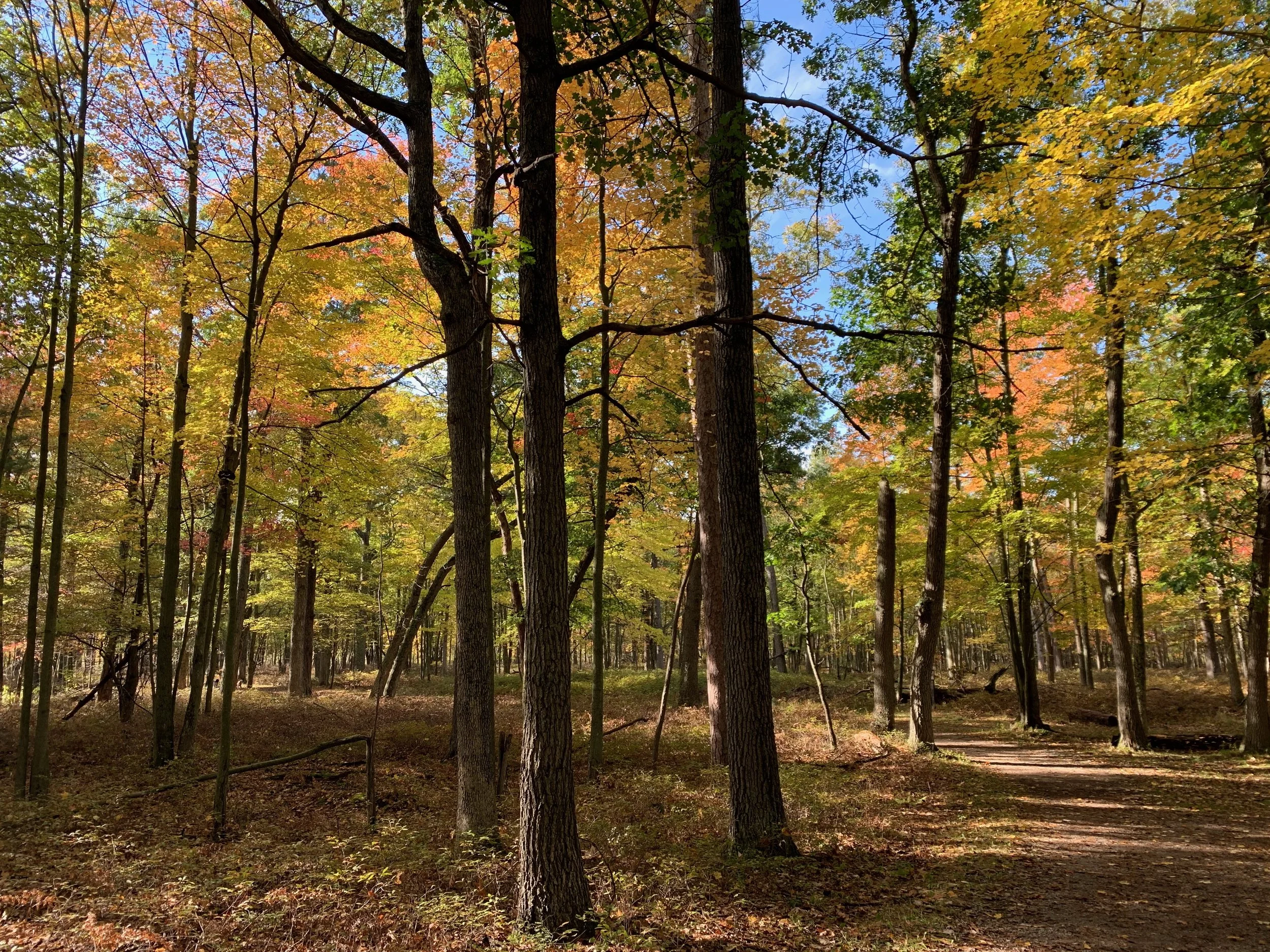
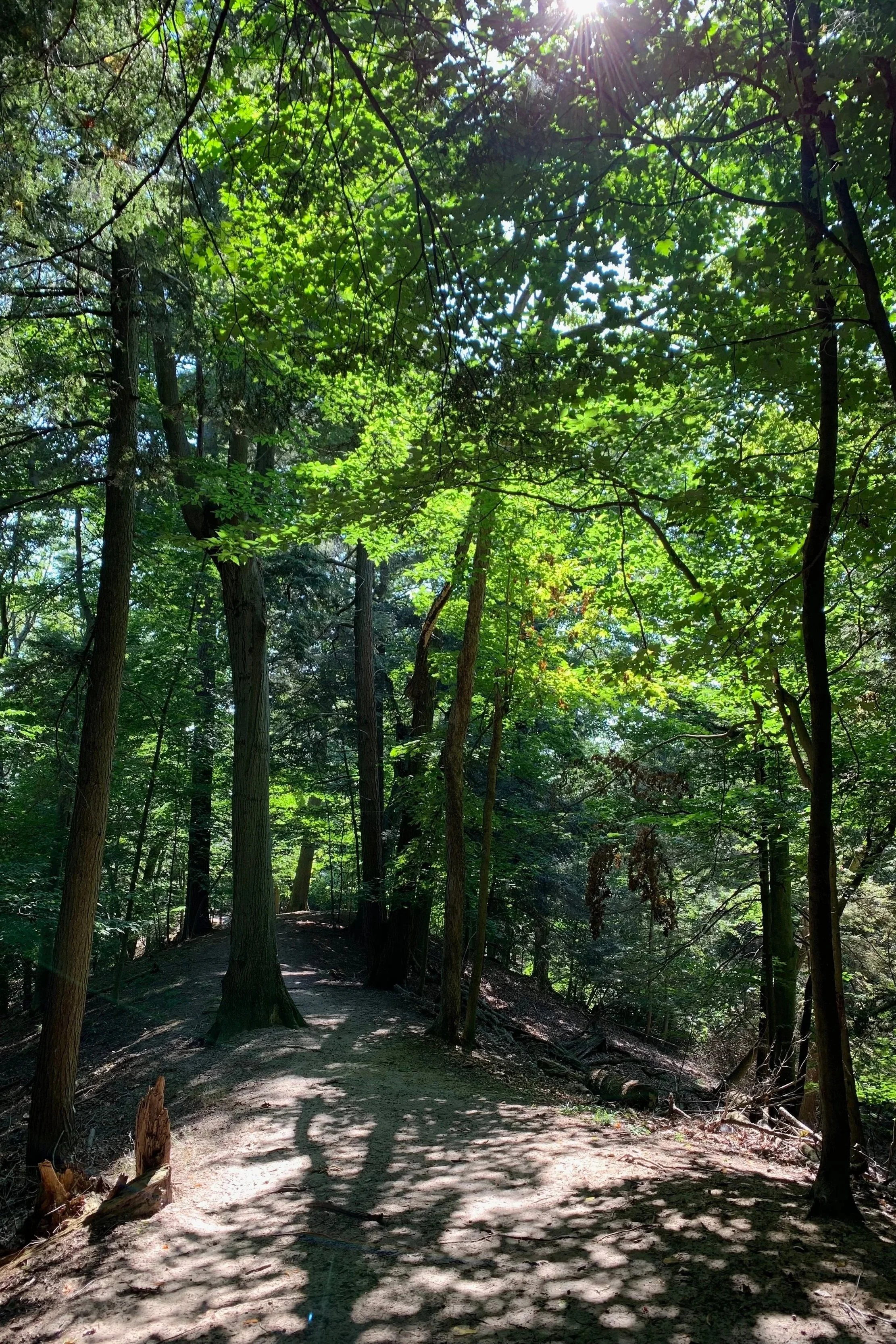
Are moderately to highly complex: in the context of nature settings, high complexity means having a lot of independent elements for us to perceive as well as having elements that aren’t similar to one another. We’re bored and uninterested if a nature scene is barren or one-note, but if we’re walking through a forest and it suddenly becomes incredibly dense and confusing, we don’t like that either.
Have some structural/patterned properties: we prefer information to be organized and patterned because our brains tend to process images as a whole, rather than individual parts; it’s easier for us to make sense of a natural setting if it’s organized, and especially when it has a clear focal point.
Have a moderate to high level of depth that we can easily perceive: we like settings that have multiple depth cues and clear spatial definition that allow us to cognitively make sense of it.
Have an even ground surface conducive to movement: we tend to like ground surfaces that help us perceive depth, and we prefer clear pathways to obscured ones.
Contain a promise of mystery: we have a preference for images that give us the sense that something interesting is just out of view like a path, a valley, or a river. These are referred to as “deflected visuals” or “the promise of information.”
We perceive to be safe.
All of these features will be enhanced if water is present. Water has been found in many studies to elicit interest, aesthetic pleasantness, and positive feelings like tranquility. With some exceptions like scary storms or polluted grossness, the presence of water for the most part is something we strongly prefer.
By contrast, we don’t like settings that are:
Either too unstructured and complex, or too bland, without a focal area.
Restricted in depth.
Difficult to move in because of rough and uneven ground.
Absent of water or a mystery element.
Scary.
Many studies have confirmed that these preferences are more or less universal; our preferences for natural landscapes are not random or idiosyncratic, though it should be noted that things like culture, education, and profession do play a role in our preferences.
Additionally, many studies have confirmed people’s preference for natural settings compared to urban ones (especially those with no vegetation or water), even when looking at non-spectacular views of nature. Here, complexity and other factors don’t matter as much as the fundamental differences between nature and man-made items.
These studies also show that our liking and preference toward nature is not restricted to wilderness alone. Americans tend to perceive a setting as “natural” if:
It contains extensive vegetation or water
If buildings, cars, and other built features are minimized or hard to see
Practical Applications of This Framework
Understanding the “how” and “what” of how our brain perceives and formulates preferences can be a powerful tool in helping us make decisions in our daily lives, namely, what type of environment we choose to spend our time in. Here are some ways that the lessons from Ulrich’s framework can be applied in our work lives.
Idea #1
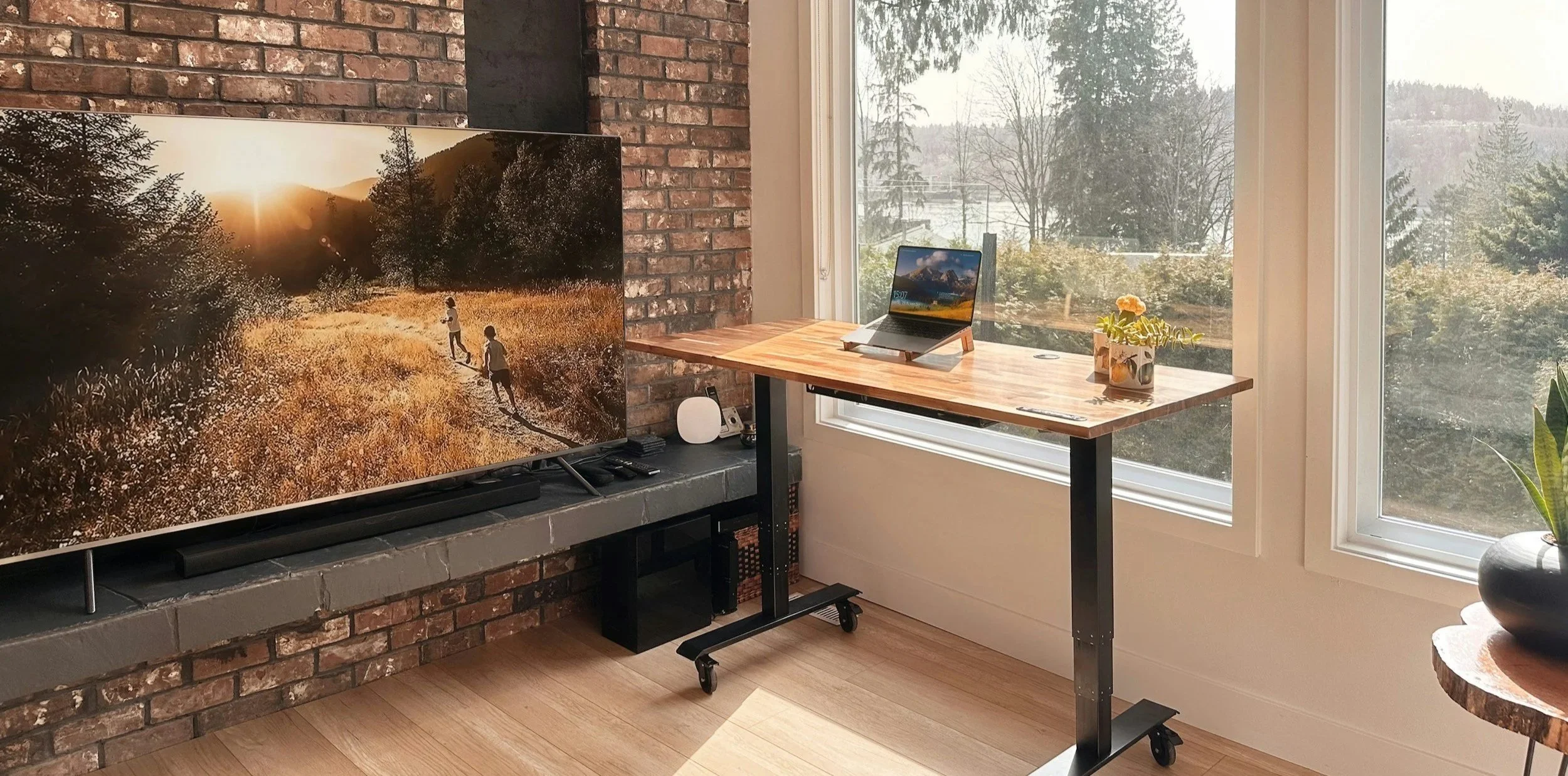
Understanding humans’ innate and shared preferences in natural environments can help inform workplace design when incorporating natural elements. If you’re in charge of designing or choosing design features for your workplace and want to ensure a sense of aesthetic pleasure for your workers and guests: water features and a collection of various types of vegetation will go a long way in creating an innate sense of liking for your space.
Idea #2
Trust your instincts. The example of walking into a creepy storage space at work and feeling uneasy is in most cases perfectly harmless, but in other scenarios, our safety may truly be at risk. If a space or a situation doesn’t feel right to you, trust that feeling and move on.
Idea #3
One of our brain’s favorite features of a natural environment is a sense of mystery; a winding path is preferred to a straight one because our brains can anticipate something interesting will appear just around the bend. Try decorating your workspace with nature imagery that evokes a sense of mystery - even a screen saver that features a hiking trail. When your brain can be surrounded by images that evoke positive emotions, positive boosts in your mood will likely follow.
Idea #4
Many of our innate aesthetic preferences are tied to survival instincts and sense of safety, so when you’re ready to explore a garden or a park on your lunch break, make sure you choose a setting that will offer a reliable sense of safety - can you easily navigate it, and does it offer you the ability to perceive threats. One of the best ways to select a location if you’ve never been there before is to visit first with someone who is familiar with the area.
Sources
Ulrich R. S. (1983). Aesthetic and affective response to natural environment. In Altman I., Wohlwill J. F. (Eds.), Behavior and the natural environment (pp. 85–125). New York, NY: Plenum.